Free Beginning Sounds Worksheets (PDF)
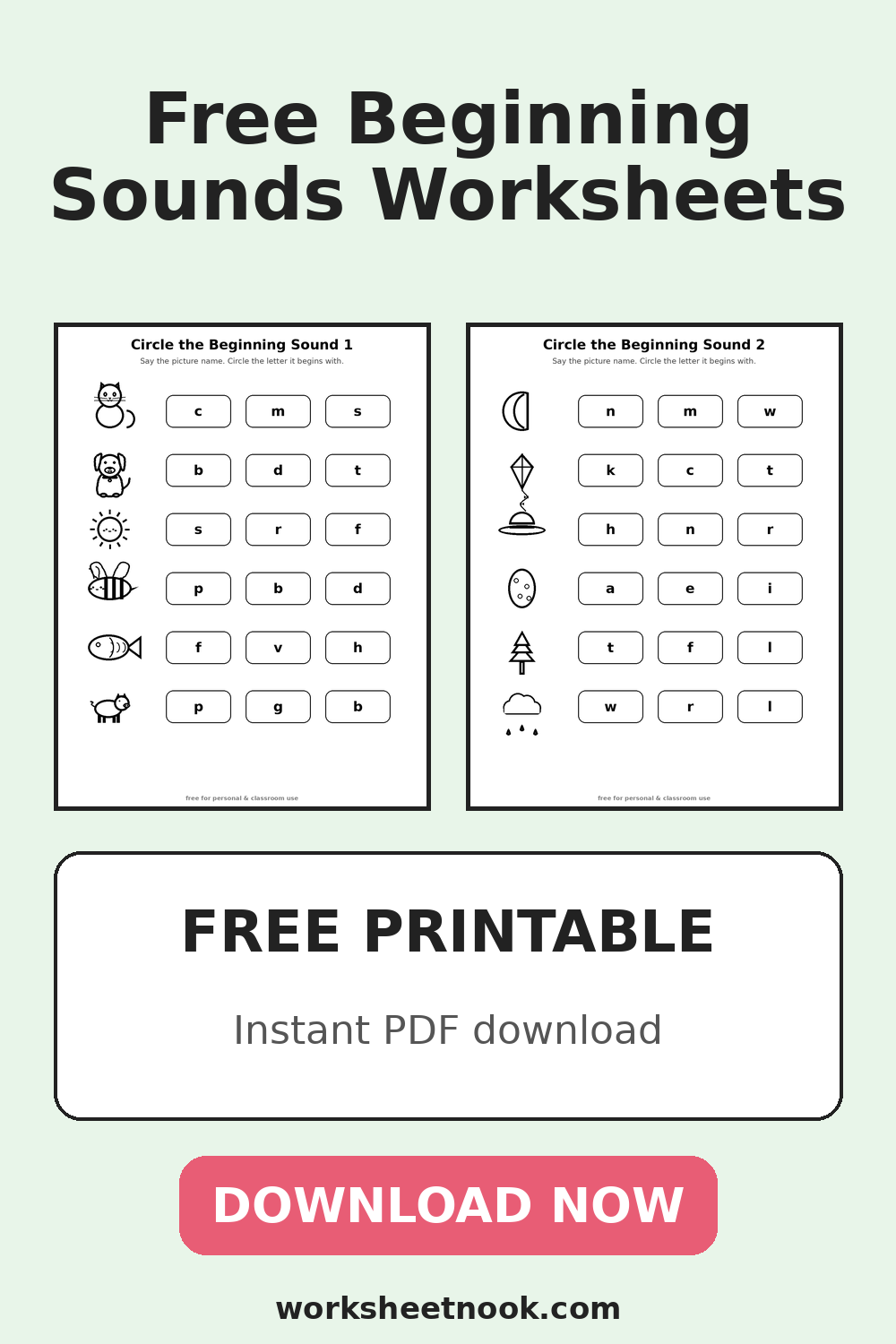
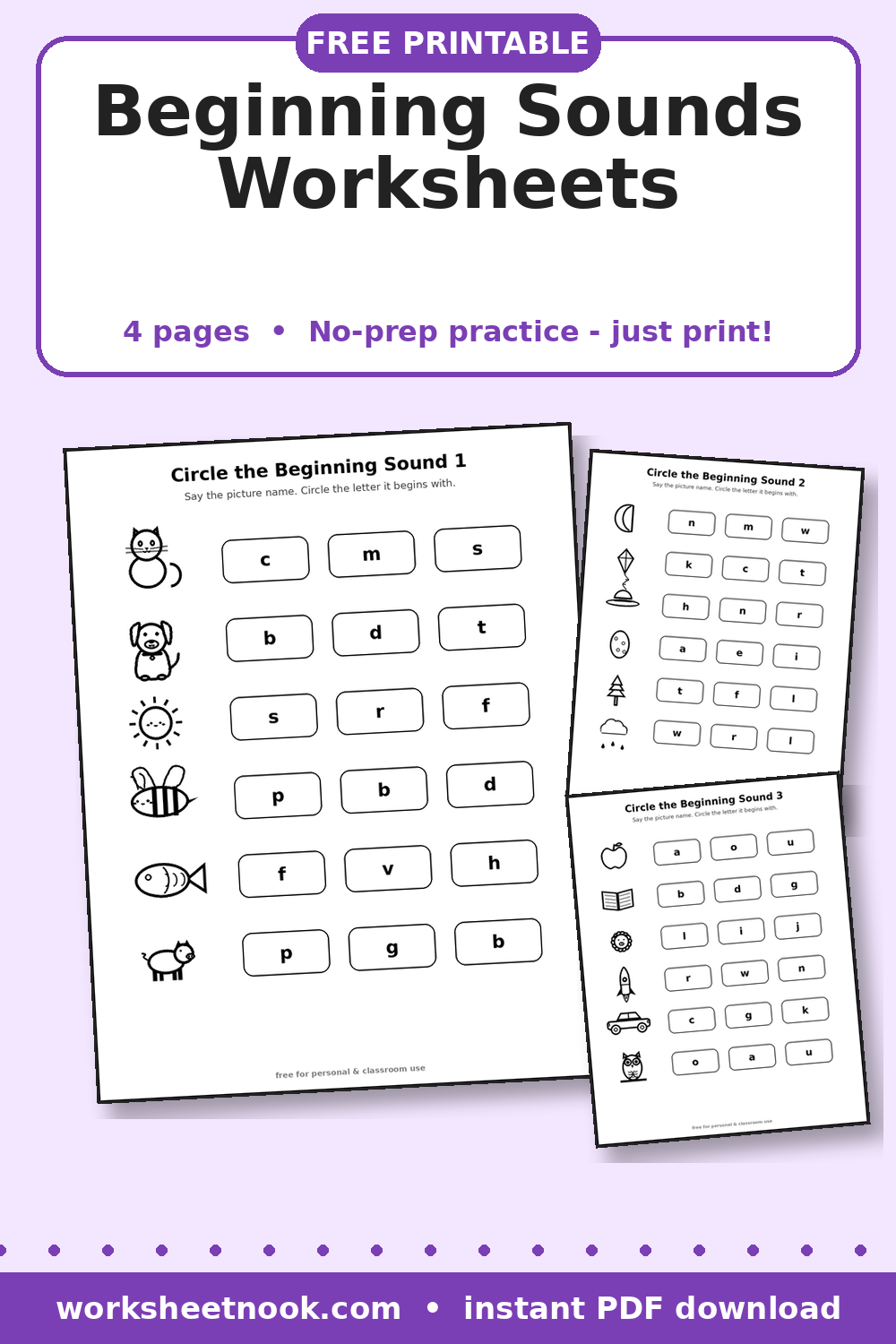
Four free beginning sounds worksheets: three Circle the Beginning Sound pages and Write the First Letter, with answer key.
What’s Included
Here is what each page in this beginning sounds worksheets set looks like, so you can pick the right one before printing:
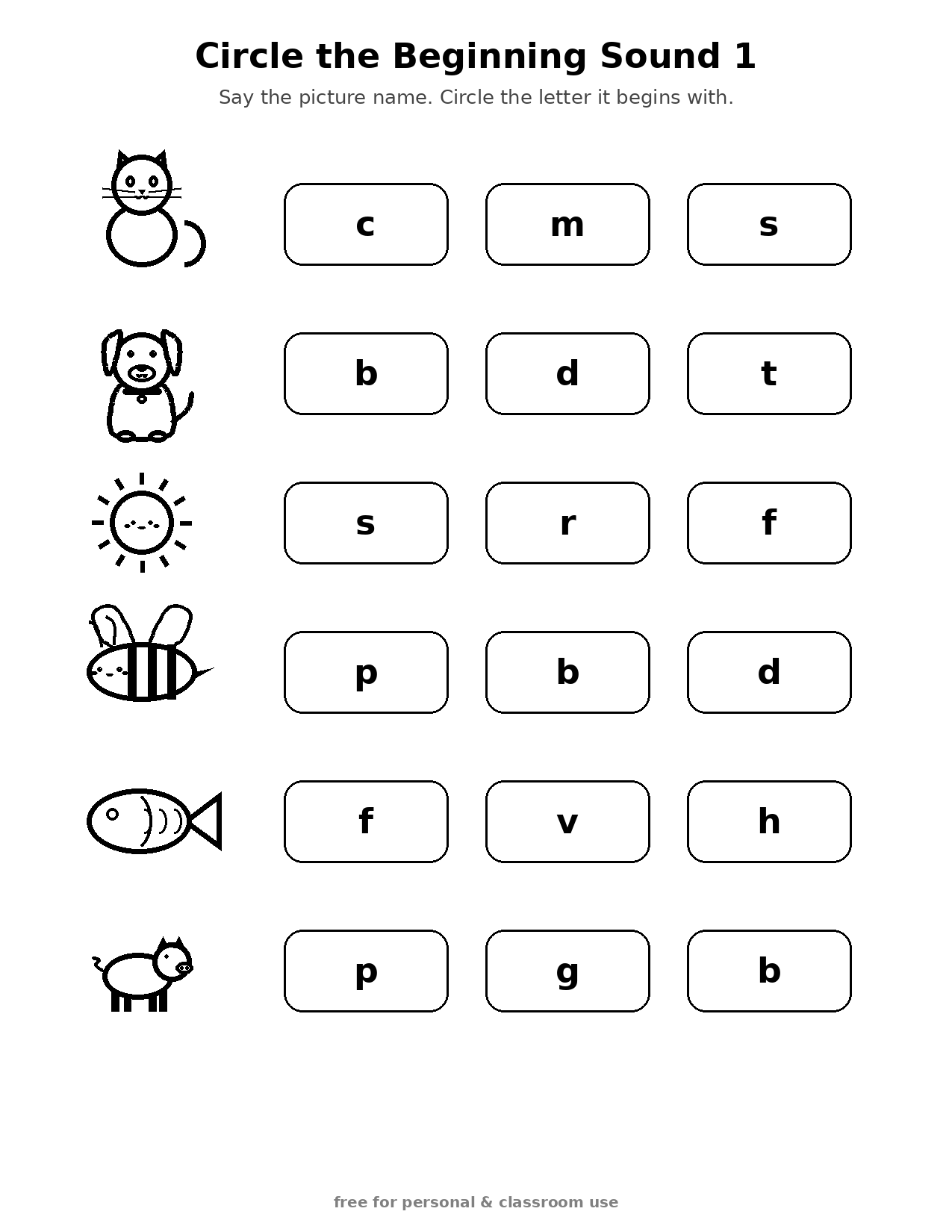
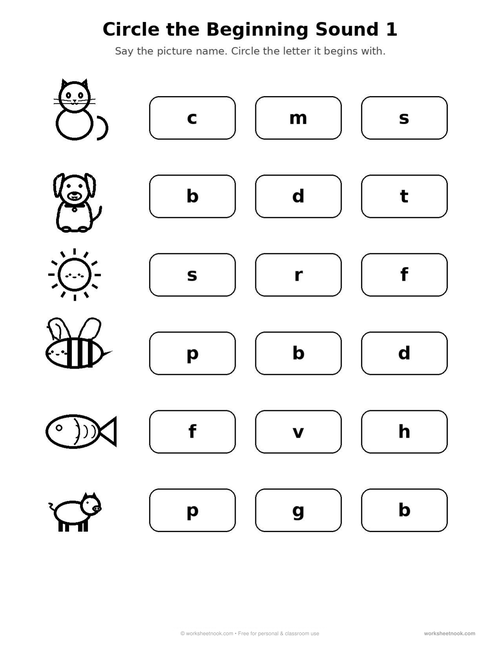
- Circle the Beginning Sound 1 – practice with circle the beginning sound 1, using clear instructions and simple pictures that support early readers.
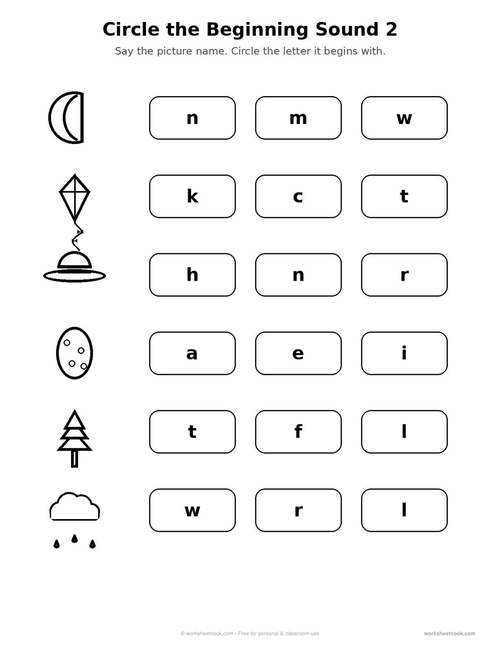
- Circle the Beginning Sound 2 focuses on circle the beginning sound 2; each item is short, so kids get many small wins on one page.
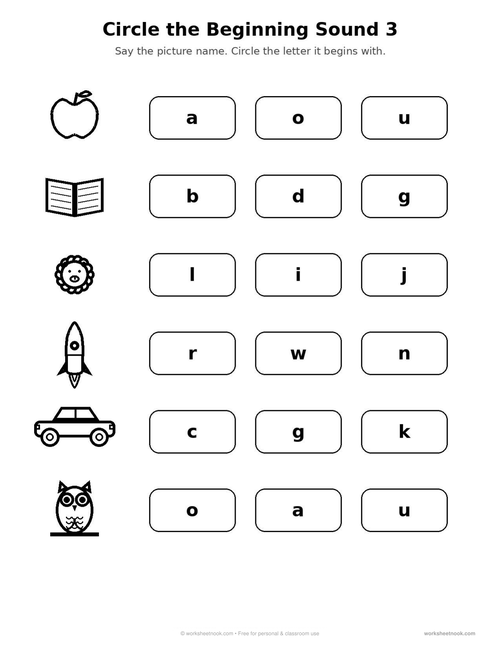
- Circle the Beginning Sound 3 works on circle the beginning sound 3 with generous writing space for beginning writers.
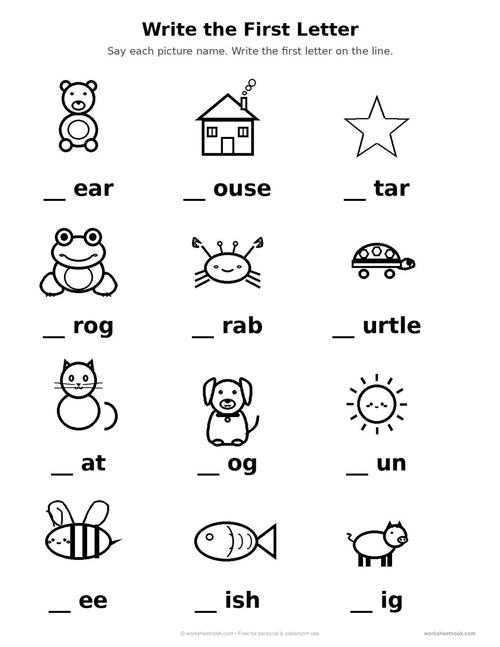
- Write the First Letter reinforces write the first letter in a slightly different format, which helps children apply the skill rather than just repeat it.
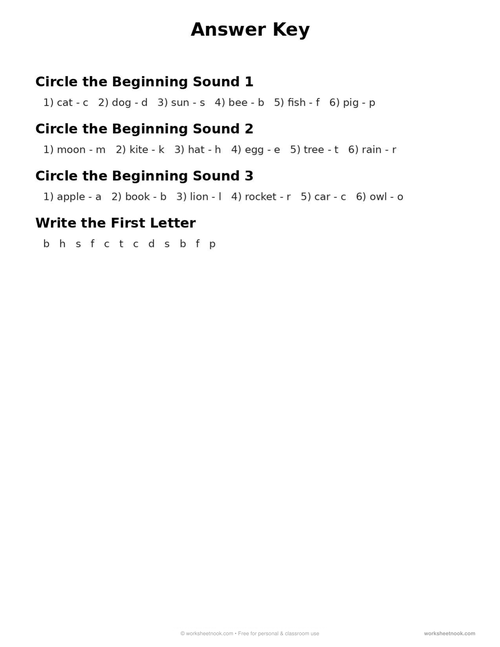
- Answer Key – every answer for the set, so kids can check their own work and parents or teachers can mark quickly.
Preview & Download
Click any picture, page name or Download button to get the full-size printable (US Letter). The last PDF is the answer key.
How to Use These Beginning Sounds Worksheets
- Say the picture name slowly.
- Listen to the first sound.
- Circle the letter.
- Write it.
Learning Benefits
Hearing the first sound in a word (phonemic awareness) is one of the strongest predictors of reading success.
Ideas Beyond the Page
- I spy beginning sounds.
- Sort objects by sound.
- Sound baskets.
- Alphabet songs.
Tips for Parents and Teachers
At home
Turn the words from the page into a quick game: spot them in a picture book, on cereal boxes or on street signs. Keep sessions short and positive, and stop with a success so kids want to come back tomorrow. Say every word out loud while working; hearing and saying sounds is just as important as writing them.
In the classroom
Have students read their finished answers to a partner – it doubles as fluency practice. Use the pages at a literacy center or for small-group guided practice, with the teacher modeling the first item aloud. Laminate a page and reuse it with dry-erase markers for daily review during a phonics or grammar unit.
Who It’s For and What Kids Practice
These literacy worksheets help children practise letter and sound knowledge, vocabulary, spelling patterns, reading fluency and neat handwriting. Most children are ready for this kind of practice between about 4 and 8, but readiness matters more than age. Start with oral practice – saying sounds and words out loud – and introduce the pencil work once your child can hear the sounds confidently.
It also links nicely to general learning: chatting about what kids notice, enjoy and want to learn more about while kids work turns a quiet activity into a language-rich one. Words worth using: look, find, choose, finish, proud, try, color, share.
Ages 4-6.
A Simple Step-by-Step Plan
- Start with a quick oral warm-up: say a few sounds or words related to the page.
- Read the directions aloud and model the first item.
- Let your child complete the page, saying each word as they write it.
- Read the finished answers back together.
- Pick one word from the page to spot in a book or around the house.
3 Ideas to Extend the Learning
These follow-up activities need little or no preparation:
- Display finished work on the fridge or a class board so kids see their effort valued.
- Let kids choose the order of the pages, which builds independence and motivation.
- Talk about the pictures before starting: what do you see, what might happen next?
Troubleshooting Tips
Many children mix up similar letters (b/d, p/q) or guess words from the first letter. Slow down, model the sounds clearly and use the pictures as clues. Short, frequent practice is far more effective than long sessions.
Printing Tips
- Print at 100% (Actual size) so the boxes and lines stay the right size for small handwriting.
- Slip a page into a sheet protector and use a dry-erase marker to reuse it all week.
- Print the answer key separately and keep it in a folder for quick checking.
- Name pictures together before starting.
Extra tips: Print at 100% so tracing lines and writing spaces stay the right size for beginning writers. Use a pencil with an eraser rather than a pen so kids feel free to try again. For ESL or older learners, print two pages per sheet to save paper while keeping the text readable.
More Printables in This Series
- Free Letter Recognition Worksheets (PDF)
- Free CVC Words Worksheets (PDF)
- Free Alphabet Tracing Worksheets (Printable PDF)
- Browse all letters & alphabet printables
- Make your own with the free Handwriting Worksheet Generator
Frequently Asked Questions
How many pages are in this beginning sounds worksheets set?
5 pages in total, answer key at the end. Print only what you need today.
What age is this literacy practice for?
Typically ages 4-8 (pre-K to about 2nd grade), but it also works for ESL learners of any age who are learning English sounds, words and grammar.
My child gets frustrated. What should I do?
Do the first item together, say each sound or word out loud, and keep sessions to 5-10 minutes. Praise effort, not just correct answers.
Can I use these for ESL students?
Yes. The simple instructions and clear pictures make them suitable for English language learners in class or tutoring.
Can I create my own word practice?
Yes – try our free Word Scramble Maker, Word Search Maker or Handwriting Worksheet Generator to practice any word list.
Want more? Preschool Skills Pack (152 pages)
One ad-free, numbered PDF – coming soon to the shop.
Get new free printables every week
Join the Worksheet Nook list - new worksheets and coloring pages, no spam.
You May Also Like
 Free Scissor Cutting Practice Worksheets (PDF)
 Free Shapes Worksheets for Preschool & Kindergarten (PDF)
 Free Opposites Worksheets for Kids (PDF)
Pin it for later
License: free for personal and classroom use. Please do not sell or re-host these files. See Terms & Disclaimer.